 Acrylic, glass, and metal don’t care how good your printer is. They care whether the ink sticks, survives a scratch, and still looks sharp after a year in the real world. That is the whole game. If you choose UV ink by color gamut alone, you will eventually ship a beautiful print that flakes off in a customer’s hand.
The first mistake is treating these three substrates as one family. They are not. Acrylic is a plastic that can stress-crack, haze, or attract static. Glass is smooth, non-porous, and often invisible until it shatters. Metal is a chameleon: bare aluminum, brushed stainless, powder-coated steel, and oily galvanized sheet all behave differently. Your UV ink has to match the actual surface, not the label on the box.
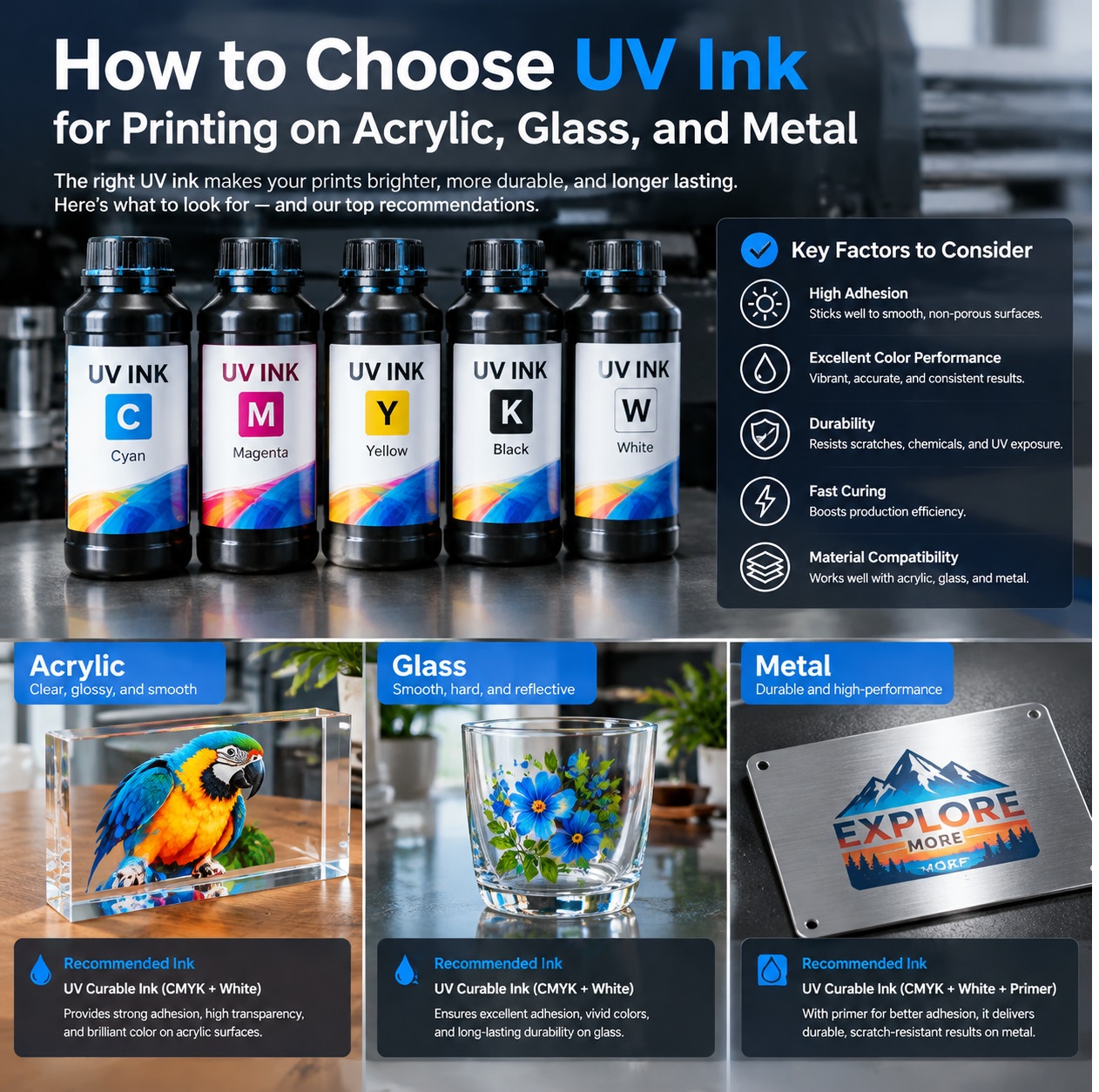
Start with adhesion. For acrylic, you need an ink that bites without softening the sheet. Aggressive solvents are not the answer because UV ink should be 100 percent solids and cure fast. Look for a formulation that passes a cross-hatch tape test after full cure, not five minutes after the lamp. For glass, adhesion is often about surface energy and primer. Some UV inks bond directly to glass, but many need a silane primer or flame treatment to survive washing and handling. For metal, adhesion is a tug-of-war with oils, oxides, and coatings. If the metal is oily, no ink will save you. Clean it, pretreat it, then choose an ink with the right monomer package for the alloy.
Curing is next. Acrylic and glass are heat-sensitive. They can warp, crack, or develop stress lines if the UV lamp throws too much infrared. LED UV curing runs cooler and is often the smarter choice for thin acrylic and decorative glass. Metal is more forgiving with heat, but it can reflect UV light and cause undercure at the edges. If you print on curved metal or reflective surfaces, test the cure at the shadowed areas, not just the center of the print.
Durability separates a sample from a sale. Indoor signage on acrylic may only need scratch resistance and colorfastness. Outdoor glass bottles, architectural panels, or metal machine tags need water resistance, chemical resistance, and abrasion resistance. Ask for test data: rub resistance, adhesion after humidity, solvent wipe, and UV weathering. A supplier who only sends a color chart is not a partner. A supplier who sends a cure schedule and a failure report is.
Ink type matters too. There is no single UV ink for all three. Flexible acrylics may need a flexible ink to avoid cracking when the sheet is thermoformed or cut. Rigid glass often does better with a hard, glossy ink that resists detergents. Metal may need a formulation with corrosion inhibitors or a primer system for powder-coated surfaces. If you print on multiple substrates in one shop, you can either stock different inks or find a hybrid that compromises. Hybrids are convenient, but they rarely win a performance contest. Know where you can compromise and where you cannot.
Color and finish are the fun part, but they should not drive the decision alone. Acrylic prints often look best with a clean, high-opacity white backing. Glass needs white ink that hides the substrate or a translucent ink that uses it. Metal can handle metallic effects, but the ink’s opacity and gloss will change how the metal shines through. Check the ink’s surface energy and intercoat adhesion if you print white plus color plus varnish. A beautiful first layer means nothing if the second layer peels.
Your curing equipment is part of the ink choice. A mercury lamp, a gallium-doped lamp, and an LED lamp do not cure the same chemistry. The ink must match your wavelength, intensity, and line speed. If you buy ink first and then try to force your lamp to cure it, you will waste time, money, and maybe a lot of acrylic. Tell your ink supplier what lamp you run, how many passes, and what ambient temperature your shop reaches in summer.
Cost per print is the number that matters, not cost per liter. A cheaper ink that needs a primer, extra passes, or a higher scrap rate is expensive. A higher-priced ink that cures in one pass and passes the tape test is cheap. Calculate ink consumption, primer, cleaning, rework, and downtime. Then ask for a trial on your own machine with your own operators. A lab sample cannot replicate your dust, your static, or your Monday morning rush.
Finally, choose a supplier who understands your market. If you print acrylic displays, glass awards, and metal control panels, you need an ink partner who can recommend different products for different jobs, not one drum for everything. Ask for a sample kit, a cure guide, and a written compatibility matrix. Test acrylic, glass, and metal side by side. Scratch them, wash them, bend them, and leave them in the sun. The ink that survives your test is the one you should buy.
Acrylic, glass, and metal are unforgiving teachers. They will tell you quickly if you chose the wrong UV ink. Choose based on adhesion, cure, durability, and your actual production line. Then the print will look as good on day 500 as it did on day one. If you are ready to stop guessing, request a substrate-specific UV ink sample kit and a cure audit. That is how you turn a risky print into a repeat order
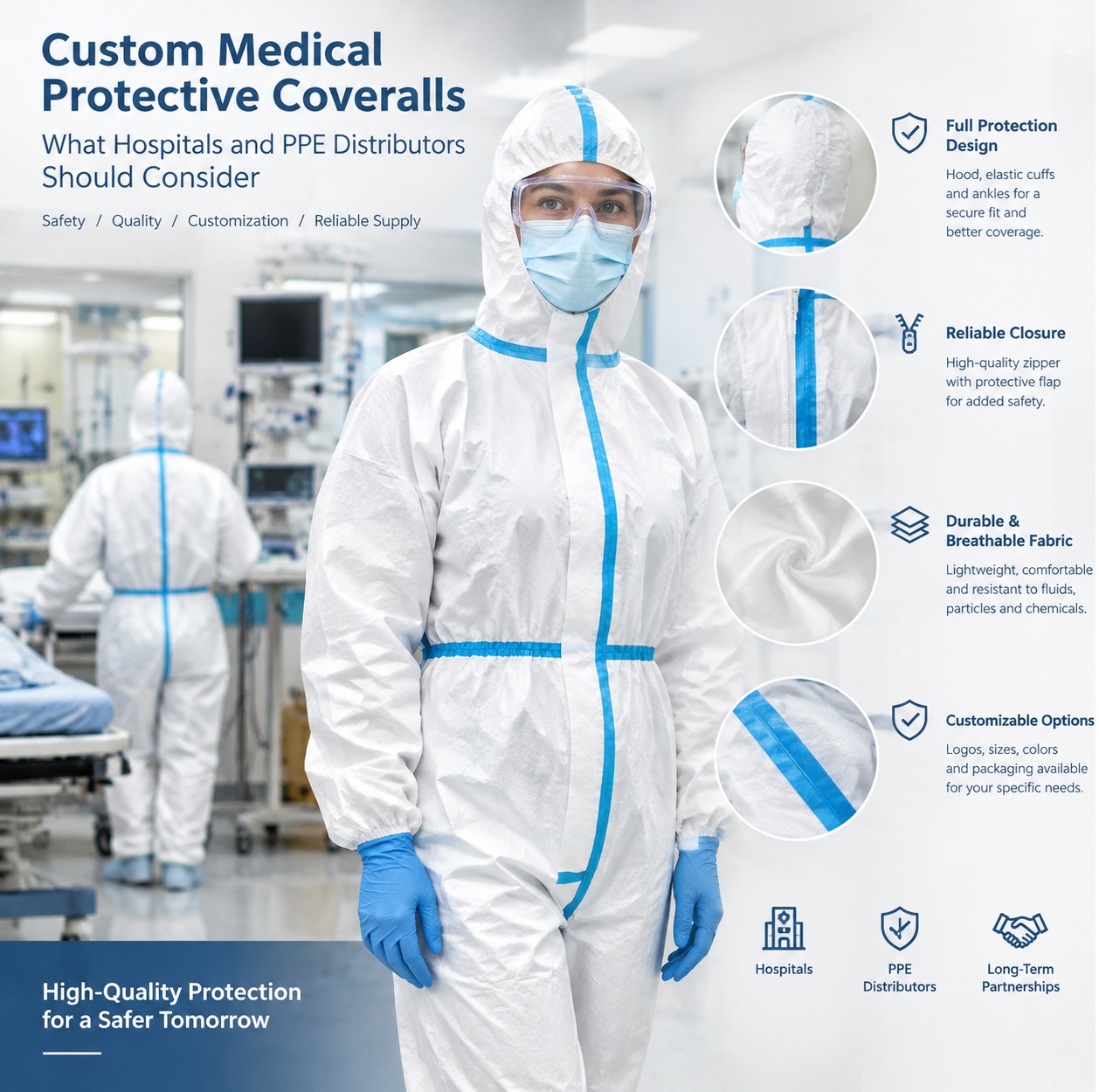 Walk into any hospital procurement office and ask about the last time a coverall order went perfectly. You will get a tired laugh. The gap between what arrives on a pallet and what a nurse actually needs at 3 a.m. in an isolation ward is where money, safety, and reputations get lost. Custom